%20(1).png)
Remote HVAC Monitoring, Diagnostics & Predictive Maintenance
Prevent HVAC downtime with remote monitoring and predictive maintenance to save costs, energy, and extend equipment life.

Prevent HVAC downtime with remote monitoring and predictive maintenance to save costs, energy, and extend equipment life.
You know the feeling. A critical HVAC unit goes down on the hottest day of the year. Operations grind to a halt, comfort complaints flood in, and you're left scrambling for an emergency repair, facing unpredictable costs and frustrating downtime. For too long, managing heating and cooling systems has been a reactive cycle of crisis and repair.
But what if you could know about a potential failure weeks before it happens? What if you could trade emergency calls for scheduled, proactive maintenance, all while lowering your energy bills?
This isn't a future concept it's the reality of remote HVAC monitoring and predictive maintenance. It's about shifting from a state of reactive chaos to one of proactive control, and this guide will show you exactly how it works and why it's one of the smartest investments you can make for your property.
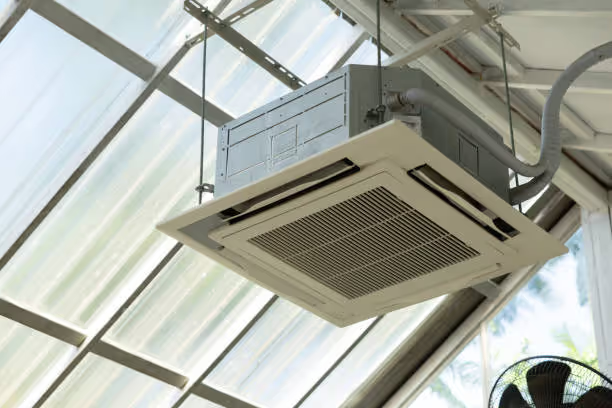
Relying on traditional maintenance schedules or waiting for a complete breakdown is no longer a viable strategy. The hidden costs of this outdated model are staggering. Industry data shows that a single hour of downtime for a commercial HVAC system can cost a business thousands in lost productivity and revenue. It’s a budget-breaking scenario that remote monitoring is designed to prevent.
Beyond catastrophic failures, there's the silent drain of inefficiency. Systems that are running poorly, even if they haven't failed yet, can consume up to 15-20% more energy. That’s a significant, unnecessary expense on your monthly utility bills. The 'business as usual' approach isn't just risky; it's actively costing you money.
At its core, remote monitoring is about giving your HVAC system a voice. It uses advanced technology to translate the system's operational data into clear, simple business decisions. The process is a seamless, three-step journey.
It starts with placing small, non-invasive smart sensors on your critical HVAC components—chillers, rooftop units, boilers, and air handlers. These aren't just simple thermometers. They monitor the vital signs of your equipment in real-time, including:
This stream of data is securely sent to the cloud, where powerful analytics get to work. The system establishes a baseline for your equipment's normal operating behavior. Then, it constantly scans for anomalies—tiny deviations from the norm that are invisible to the human eye but are often the earliest warning signs of an impending issue.
This is where the data becomes truly valuable. Instead of a flood of confusing numbers, you receive clear, actionable information.
Imagine getting a simple alert on your phone or email that says, "Rooftop Unit 3 shows an abnormal vibration pattern consistent with early-stage fan motor bearing wear. Recommend scheduling inspection within 14 days to prevent failure." You can then log into a clean, intuitive dashboard to see performance trends, energy consumption, and the overall health of every unit in your portfolio, all from one screen.
Many systems can send an alert when a problem has already occurred. True predictive maintenance is different. It’s about connecting the dots to forecast the future.
This is the critical difference:
This level of foresight transforms your entire maintenance strategy. It allows us to dispatch a technician with the right parts and a clear understanding of the problem before it causes a shutdown. This increases first-time fix rates, eliminates guesswork, and turns costly emergency calls into planned, efficient service visits. This advanced approach is central to our comprehensive HVAC system service, ensuring your equipment receives expert attention precisely when it's needed.
Adopting new technology often requires getting buy-in from financial stakeholders. A remote monitoring and predictive maintenance program isn't a cost center; it's an investment with a clear and compelling return. Here are the key points to present to your team:
Making the switch to a smarter maintenance model naturally comes with questions. Here are the answers to the most common ones we hear.
How expensive is it to get started with remote monitoring?
The cost is often much lower than a single emergency repair bill. We view it as an operational investment that pays for itself through energy savings, reduced repair costs, and extended equipment life. We offer transparent, upfront pricing tailored to your specific needs, so you know the exact cost without any surprises.
Is my system's data secure?
Absolutely. We use industry-standard security protocols to ensure your data is encrypted and protected at all times. The system is designed to provide one-way information flow from your equipment to our monitoring platform, ensuring it cannot be used to access your broader network.
Is the installation process disruptive?
Not at all. The installation of the wireless sensors is quick, non-invasive, and can typically be done during regular business hours without any interruption to your operations or the function of your HVAC system.
Yes. While the ROI is most dramatic in commercial settings with complex equipment, the principles of proactive maintenance and efficiency are just as valuable for homeowners. A smart monitoring system provides peace of mind, ensuring your home's air conditioning and heating systems are running optimally and helping you avoid unexpected breakdowns.
Ready to take control of your HVAC operations? It starts with understanding what’s really happening inside your systems. Contact Next Level Comfort today to schedule a complimentary assessment and see how a proactive approach can bring a new level of efficiency and peace of mind to your property.